
Low Carb Diet Linked To Cancer
2. Does dietary fat cause breast cancer?
Dr. Walter Willett, an MD who also holds a doctorate in epidemiology at the Harvard School of Public Health, attempted to prove the link between dietary fat and breast cancer from Doll's study by utilizing a 61-question dietary questionnaire in a large group of nearly 90,000 female nurses. The results were analyzed, and estimates of total fat, saturated fat, linoleic acid (a polyunsaturated fat found in vegetable oil), and cholesterol within the nurses' diets were calculated and compared with rates of medical issues, like cardiovascular disease and cancer.
Willett's group went on to publish three sets of findings on links between dietary fat and breast cancer. The first publication, titled Dietary Fat and the Risk of Breast Cancer, released in 1987, showed a trend toward decreased risk of breast cancer with higher rates of dietary fat consumption, but this was not statistically significant.6 A study published five years before had similarly revealed no relationship.7
Willett's group would then combine the data from seven studies, analyzing data that included over 337,000 women and 4,980 cases of breast cancer. Yet the results, once again, revealed no link between dietary fat and the risk of breast cancer.8
The scientists cautioned that the length of follow up in their initial study was possibly too short to detect an increased risk of cancer, or that even the lowest dietary fat intakes were simply too high to lower the risk.
With nearly 15 years of follow up, a repeat analysis, now including women consuming less than 20% of their diet as fat (remember, this was after decades of endless low-fat recommendations), found no significant change in the incidence of breast cancer.9
Since Willett's initial massive study, numerous other studies have attempted to link dietary fat and breast and other cancers. Studies remain negative, and even Willett has publicly stated that "support for a major relationship between fat intake and breast cancer risk has weakened considerably as the findings from large prospective studies have become available."10
Based on the evidence to date, there is likely no benefit to lowering fat intake to reduce the risk of breast cancer.
3. Do red and processed meat cause cancer?
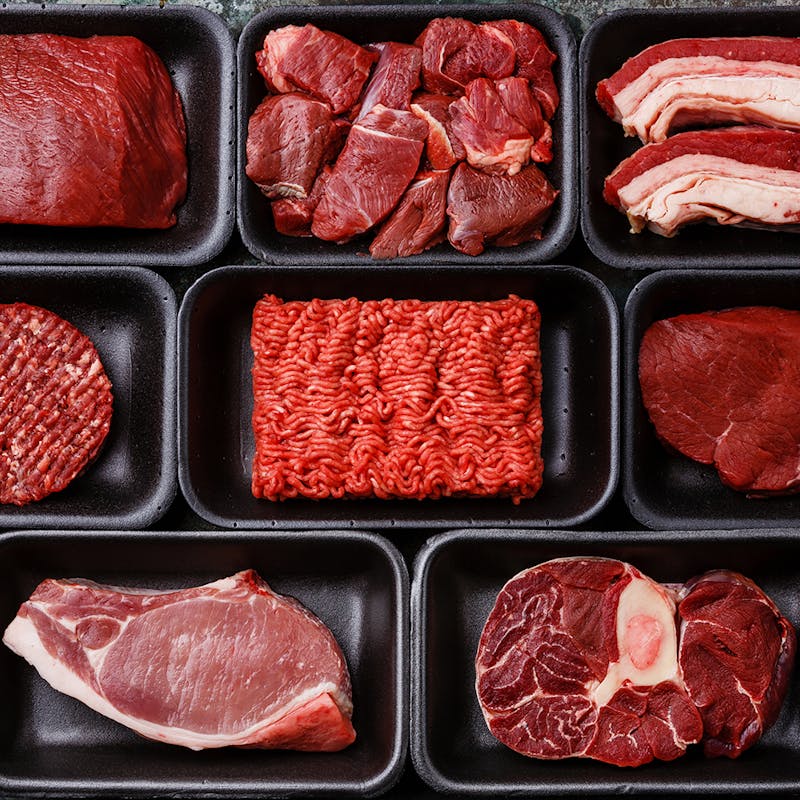
Meat has taken the lion's share of blame when it comes to food with the potential to cause cancer. Specifically, meat consumption has been linked to a higher risk of colon cancer. However, much like Doll and Armstrong's worldwide epidemiologic study, the link has been inconsistently shown in population studies.
Many sources reporting on the health issues of red meat and a potential link to cancer often quote a report from the World Health Organization's (WHO) International Agency for Research on Cancer (IARC).11 What is often under-appreciated is that this WHO report is not actually a study, but rather the interpretation of the overall science by a specific group of individuals. It is notable that the authors of the WHO report repeatedly state that the evidence linking red meat to colorectal cancer is weak and inconsistent, and the magnitude of any real effect may not be very large.
Furthermore, the few randomized trials available have found that diets restricted in red meat have little to no effect on the risk of colon cancer.12 Several randomized studies have assessed the ability of a low-fat, high-fiber, and low red and processed meat diet to reduce precancerous adenomas, known as colon polyps. All revealed no reduction in polyps in the dietary intervention arms.13 Additionally, these low-fat groups were randomized against a western diet arm, yet still revealed no benefit.
Further confounding this potential link is the fact that red meat and processed meat are entirely different entities and should not be conflated. Even the WHO recognizes that red meat and processed meat do not pose equivalent risks.14
Furthermore, there are some compelling mechanisms revealed in animal studies that could explain why charring or burning meat (which creates potentially carcinogenic chemicals such as polycyclic aromatic hydrocarbons and heterocyclic aromatic amines), could increase the risk of colorectal cancer.15 However, this points toward charred meat as the carcinogen – not necessarily red meat itself.
The potential of burnt food to become carcinogenic in the colon is a major reason why the colon cancer-red meat link has been studied so vigorously.16 Yet, even this association has yielded a potential overall increased risk of colon cancer that is "very small, and the certainty of evidence is low to very low."17
While we know that meat in the diet provides a plethora of vitamins and minerals, its relationship to cancer remains backed by weak and conflicting evidence. Meat is also a high-quality protein source that aids the body in repair and recovery. Thus, for those seeking a complete diet, purposefully excluding meat to reduce the risk of cancer is not backed by substantial evidence and could even lead to inadequate nutrition. The strongest conclusion we can draw– based on the evidence– is that eating charred red meat or processed meat may increase the risk more than eating red meat in general (although the risk is still very low in absolute terms and based on weak evidence).
For more information on this topic, please check out our guide:
Guide to red meat – is it healthy?
GuideHere is our guide to what we currently know about red meat, so you can make an informed decision about whether to include it in your own diet and, if you do, how much of it you may decide to eat each week.
4. Do any foods cause any sort of cancer?
With the body of data that currently exists, it is challenging to prove that any particular food causes cancer. Most studies are epidemiologic, which can suggest associations but cannot prove causation. In addition, these studies use food frequency questionnaires, which are notoriously unreliable. Even if some of the data are of reasonable quality, the magnitude of any relationship found between food and cancer is typically very small; this makes it impossible to determine whether the link is real or by chance, or whether it is due to an unaccounted-for variable.
The issues with epidemiologic studies and the back and forth media-frenzy of misleading headlines they produce has been scientifically parodied in the study "Is everything we eat associated with cancer? A systematic cookbook review."18 This study revealed that it is possible to find evidence for a positive or negative effect of most foods when it comes to population studies and cancer.19 However, the vast majority of these claims are based on very weak statistical evidence.
The following four levels of support would be necessary to prove a strong link between certain foods or eating patterns and cancer:
- Population/epidemiologic study support
- Mechanistic support (i.e. a mechanism exists to explain the relationship)
- Animal study support
- Human randomized controlled trial support
It is humbling to note that all four of these levels have never been demonstrated for any eating patterns and any type of cancer.
5. How could foods cause cancer?
Food is essential for life; how can we compare it with other known carcinogens like tobacco smoke or car exhaust?
A food could theoretically increase our risk of cancer if it causes a tangible change within the body that promotes an environment conducive to a cell becoming cancerous.
The following mechanisms describe how foods could possibly cause cancer:
- The food and/or cooking process could contain or produce a carcinogen that damages our cells or a part of the body. This repetitive damage could eventually leave this area more prone to cancer (much like repeated injury from cigarette smoke in the lining of the lungs).
- The food or cooking technique could contain/produce a chemical or free radical that damages DNA, which could lead to the expression or mutations of genes that promote unchecked cellular replication, growth, and eventually cancer.
- The food could lead to a metabolic environment that makes the induction and growth of cancer cells more favorable, like obesity or type 2 diabetes. For example, in obesity, diabetes, or a diet that promotes elevated blood glucose and insulin, normal cells may receive messages that activate cellular growth and reproduction pathways that, over time, may call for their unrestrained growth and could increase the risk of eventual conversion to a cancerous cell. Such a growth stimulus has been described as a "Hallmark of Cancer."20
When considering the mechanisms by which a food could be harmful, we also must consider the potential beneficial effects of that food. For instance, higher fat diets seem to decrease body fat, improve type 2 diabetes and insulin sensitivity, and improve overall metabolic status, all of which are cancer risk factors.21 By reducing these cancer risk factors, we could hypothesize that a healthy, low-carb, high-fat diet could potentially be protective against cancer. This contrasts with the so-called Standard American Diet, comprised of high carbs, high fat, and highly processed and refined foods.
When thinking about broad categories of macronutrients, we must also consider that there can be significant heterogeneity within a given category. For example, when discussing fats, unsaturated fats in the form of vegetable oils have been used to promote cancer in animal and mouse models for decades.22These types of fats often contain free radicals that can produce oxidative damage after consumption, which, in some cases, can impart lethal damage upon cells or DNA. This can lead to cancer.23
But does this translate to a potential increased risk in humans? There are some observational studies showing associations between high omega-6 polyunsaturated fatty acid consumption and cancer.24 However, analyzing all observational studies together generally shows no link between the two.25
With respect to randomized studies in humans, one 1960s trial showed a non-statistically significant trend toward increased death from cancer in a group of men assigned to a diet high in polyunsaturated vegetable oils. But, because of the failure to reach statistical significance, as well as the fact that there were more non-adherers to the diet in the experimental arm, no strong conclusions could be drawn from those results. Prior to that study, other similar trials were all negative.26
Vegetable oils' possible link to cancer is a great example of the requirement to interpret all data, keeping in mind that a few positive observational studies do not prove cause and effect.
For more information about vegetable oils, please check out our guide:
Vegetable oils: What we know and what we don't
GuideVegetable oils have quickly become a major source of calories in our food supply. Is that a good thing? To find out, let's review what we know, and what we don't know.
6. Do fruits and vegetables fight cancer?
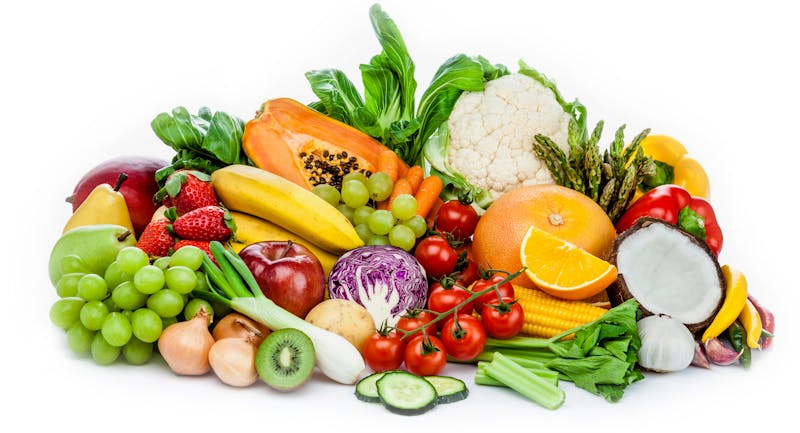
While red meat has had a reputation as a dangerous dietary component for the past several decades, fruits and vegetables have received praise for being anticancer. The studies, however, have been inconsistent and do not completely affirm the impeccable reputation of fruits and vegetables.
As with red meat and cancer, the relationship between fruits and vegetables and cancer is difficult to determine. Again, this is due to epidemiologic data that suffer from all the problems mentioned earlier in this guide.
In addition, it is often hard to account for the influence of confounding variables. For instance, smokers, heavy drinkers, and individuals who rarely exercise – all are risk factors for cancer – eat fewer vegetables than nonsmokers, moderate drinkers, and those who exercise.27 Unsurprisingly, these folks are much less healthy, but we cannot be sure that it is due to diets that lack fruit and vegetables.28 Along these lines, similar studies point to a lower risk of all-cause mortality in the vegetable eaters, but again, these numbers are plagued by confounding social issues.29
When looking at all types of chronic diseases, the benefits point even more specifically to vegetables rather than fruit, but especially green, leafy vegetables.30 This more narrow anointing of certain vegetables would be consistent with putative mechanisms: green, leafy vegetables can feed and encourage growth of certain bowel bacteria, and these bacteria may help metabolize chemicals or carcinogens that cause downstream harm. In addition, cruciferous vegetables can stimulate our antioxidant defense system, as well as similar pathways that help detoxify potentially cancerous chemicals and hormones.31
Like studies of cancer and other foods, studies looking at fruit/vegetables and cancer are mixed, with some revealing a lower cancer risk, and others showing any difference to be minimal for the identical food. 32 Furthermore, studies suggest that the anticancer benefit of vegetables is largest in heavy smokers and drinkers.33
From a mechanistic view this makes sense, as many vegetables enhance our cellular ability to detoxify potentially cancerous chemicals. In other words, these vegetables may be working hard to offset the massive damage from these individuals' unhealthy behaviors, but the benefits are likely less robust or absent for those who follow a reasonably healthy lifestyle.
A meta-analysis of 26 studies assessing the risk of breast cancer in women from 1982-1997 found no benefit of fruit consumption in reducing the risk of breast cancer, while vegetables were associated with a 25% lower relative risk.34 Additionally, an analysis specifically in premenopausal women revealed a similar potential benefit with vegetables, but not fruit.35
When we look at a newer paper that performed a pooled analysis of multiple cohort studies, no benefit of fruits or vegetables was seen in over 350,000 women with respect to their risk of breast cancer.36 Multiple other studies echoed these findings, revealing no reduction in breast cancer or any cancer with fruit or vegetable consumption.37
There are other data suggesting that when a food is eaten earlier in life it may be protective against breast cancer. However, the point has been made: the data are inconsistent, which does not allow us to conclusively link a higher vegetable or fruit intake in adults to a lower risk of breast cancer.38
Fruits and vegetables also lack conclusive support for reducing the risk of colon cancer. A pooled analysis of 14 studies revealed no reduction in colon cancer in people who reported high fruit and vegetable consumption.39 There was one positive epidemiologic study that showed an increased risk of colon cancer for those who ate less than 1.5 servings per day compared to those who ate more than 2.5 servings per day. The relative risk increase was statistically significant, although low, at 1.65.40
Much like meat, the issue of different types of vegetables and preparation of these vegetables may impact many of these studies. Were they grilled? Steamed? What were they cooked with? Studies have yet to assess this relationship, limiting the conclusions we can draw.41
Additionally, the type of vegetable and growing conditions can greatly affect the potentially beneficial chemicals present within the vegetable. For example, organosulfurs, compounds that promote cellular detoxification and antioxidant production, are found in onions, garlic, broccoli, cabbage, and other vegetables, but amounts vary considerably among varieties.42
In summary, the clinical research evidence for vegetables being protective against cancer is inconclusive. Some studies suggest that green and cruciferous vegetables provide a potential benefit, but this relationship has not been strongly proven.
Non-starchy vegetables provide a plethora of vitamins and nutrients. When eaten as part of a diet low in simple sugars or other harmful foods, these vegetables likely contribute to our health with very little, if any, risk. Furthermore, from a purely mechanistic point of view, there are plenty of ways in which vegetables could lower our risk of cancer, especially for those of us living in urban or polluted settings with unavoidable exposure to carcinogenic chemicals on a daily basis.
For more, in-depth detail about the potential cancer-fighting mechanisms of fruits and vegetables, click the "read more" button.
7. What can we say with certainty?
Not nearly as much as we would like, unfortunately. Based on population studies, limited controlled trials, cellular mechanisms, and animal studies, we have some clues about the relationship between food intake and cancer risk.
As discussed earlier in this article, we can surmise that some foods (e.g. processed meat) and cooking methods (e.g. high-temp grilling of meat) may slightly increase the risk of certain cancers. On the other hand, foods that increase cellular and DNA repair, promote carcinogen detoxification, and foster a healthy immune system (e.g. certain vegetables), may lower the risk of cancer. And, finally, many foods and macronutrients that have previously been implicated in carcinogenesis (e.g. fats) may have no effect at all on the risk of cancer.
As discussed previously, a higher-fat and lower-carbohydrate diet has been shown dozens of times in randomized studies to result in weight loss, lower insulin, and improved insulin sensitivity for individuals with type 2 diabetes or those with prediabetes.51 Thus, a low-carbohydrate diet with plenty of vegetables to help nurture bowel bacteria and detoxify potentially cancerous chemicals seems most prudent based on the conflicting available studies.
However, returning to Richard Doll – remember the important warning he left us with about the food-cancer connection before he died in 2005 at age 92:
"Given the many weaknesses of this method [nutritional epidemiology] in terms of the quality of the data, allowances for latent periods and the uncertainty… it is clear that these and other correlations should be taken only as suggestions for further research and not as evidence of causation or as bases for preventive action."
/ Colin Champ, MD
Low Carb Diet Linked To Cancer
Source: https://www.dietdoctor.com/low-carb/diet-and-cancer


0 Komentar